
Below is a comprehensive professional guide designed for waiters working in a reputable hospitality group. It is structured with clear headings, detailed explanations., and practical insights used in high-end restaurants and luxury hospitality brands.
Professional Waiters in a Reputable Hospitality Group
Working as a waiter in a respected hospitality group is not just about serving food — it is about delivering an experience. In luxury hotels, fine dining restaurants, and premium hospitality brands, service standards are exceptionally high. Every movement, word, and gesture reflects the reputation of the organization.
Professional Appearance and Grooming Standards
In a reputable hospitality group, appearance is part of the brand identity.
- Uniform must be clean, pressed, and properly fit.
- Shoes should be polished and non-slip.
- Hair must be neat and styled.
- Nails trimmed and clean (no flashy polish unless permitted).
- Minimum jewelry.
- Light, pleasant fragrance only.
- Fresh breath at all times.
Mastering First Impressions
The first 30 seconds define the entire dining experience.
- Greet guests within 30–60 seconds of seating.
- Maintain eye contact and a real smile.
- Use polite and professional language.
- Introduce yourself when appropriate.
- Offer assistance confidently.
Example ; “Good evening and welcome. My name is Daniel, and I’ll be taking care of you tonight.”
GOOD Communication Skills
Talk is the core of service excellence.
- Speak clearly and at moderate speed.
- Avoid fast speaking
- Use positive language (“Certainly” instead of “No problem”).
- Never interrupt guests.
- Confirm orders politely.
Non-Verbal Skills
- Maintain good posture.
- Avoid crossing arms.
- Nod to show active listening.
- Keep a calm facial expression.
Listen more than you speak.
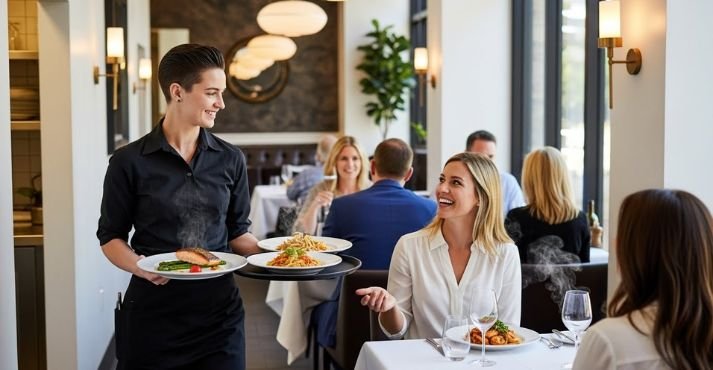
Deep Menu Knowledge for waiter job
Ingredients of every dish.
Cooking methods.
Wine pairings.
Spice levels.
Vegetarian, vegan, and gluten-free options.
Preparation time.
Fine Dining Protocol BY WAITER
Serve food from the left (if following classic fine dining).
Clear plates from the right.
Ladies first when serving.
Never reach across a guest.
Carry trays professionally.
Never stack dirty plates in front of guests.
Time Management and Table Awareness
Track table stages (drinks, starters, mains, dessert).
Monitor kitchen timing.
Avoid long waiting periods.
Avoid rushing guests.
Pre-bus tables (remove unnecessary items).
Teamwork and Internal Communication
Communicate clearly with kitchen staff.
Respect hosts and managers.
Support colleagues during rush hours.
Never argue on the floor.
Help reset tables quickly.
Hygiene and Food Safety Standards
Wash hands frequently.
Never touch food with bare hands.
Avoid touching face or hair.
Handle glassware by stem or base.
Use trays instead of hands for multiple plat
Professional Body Language
Stand straight.
Hands behind back or gently clasped.
Walk confidently but calmly.
Avoid leaning on walls or tables.
Payment Handling and Billing BY WAITER
Present bill discreetly.
Confirm accuracy before presenting.
Never rush payment.
Thank guests sincerely.
Invite them to return.
Continuous Learning and Self-Improvement
Studying wine knowledge.
Learning about global cuisines.
Practicing service techniques.
Observing senior staff.
Attending training programs.
A professional waiter in a reputable hospitality group must deliver exceptional service, not just food. Key skills include polished grooming, strong communication, deep menu knowledge, and proper fine dining etiquette. Waiters should master time management, upselling techniques, emotional intelligence, and teamwork. Handling complaints calmly, maintaining hygiene standards, and paying attention to small details are essential.
Personalizing guest experiences and understanding cultural differences enhance service quality. Staying composed during busy hours and continuously improving knowledge supports career growth. Ultimately, a waiter represents the brand, ensuring every guest enjoys a memorable, professional, and seamless dining experience from arrival to departure.