
If you have ever used the words “bookkeeping” and “accounting” interchangebly, you are certainly not alone. In fact, most beginners and even some small business owners treat them as the same thing. However, understanding the difference between accounting and bookkeeping is one of the most important steps you can take toward managing your business finances properly in 2026.
Both bookkeeping and accounting deal with financial data, and as a result, they are often confused with each other. However, they serve very different purposes, require different skill sets, and play distinct roles in the financial health of a business. In this guide, therefore, we will break down exactly what each one means, how they differ, and which one your business actually needs right now.
Accounting vs Bookkeeping — Understanding the Key Difference
What Is Bookkeeping?
Bookkeeping is the process of recording daily financial transactions of a business in an organized and systematic way. In other words, bookkeeping is all about data entry — capturing every sale, purchase, payment, and receipt as it happens. Furthermore, it focuses on accuracy and consistency rather than analysis or interpretation.
Think of a bookkeeper as someone who keeps a very detailed diary of everything that happens financially in a business — day by day, transaction by transaction. Without accurate bookkeeping, there would be no reliable data for accountants to work with. As a result, bookkeeping is considered the foundation on which all accounting is built.
Key Tasks of a Bookkeeper
✅ Recording daily transactions — sales, purchases, receipts, payments
✅ Maintaining the general ledger and journal entries
✅ Managing accounts payable and accounts receivable
✅ Reconciling bank statements every month
✅ Processing payroll and employee expenses
✅ Using software like QuickBooks, Xero, or Wave for data entry
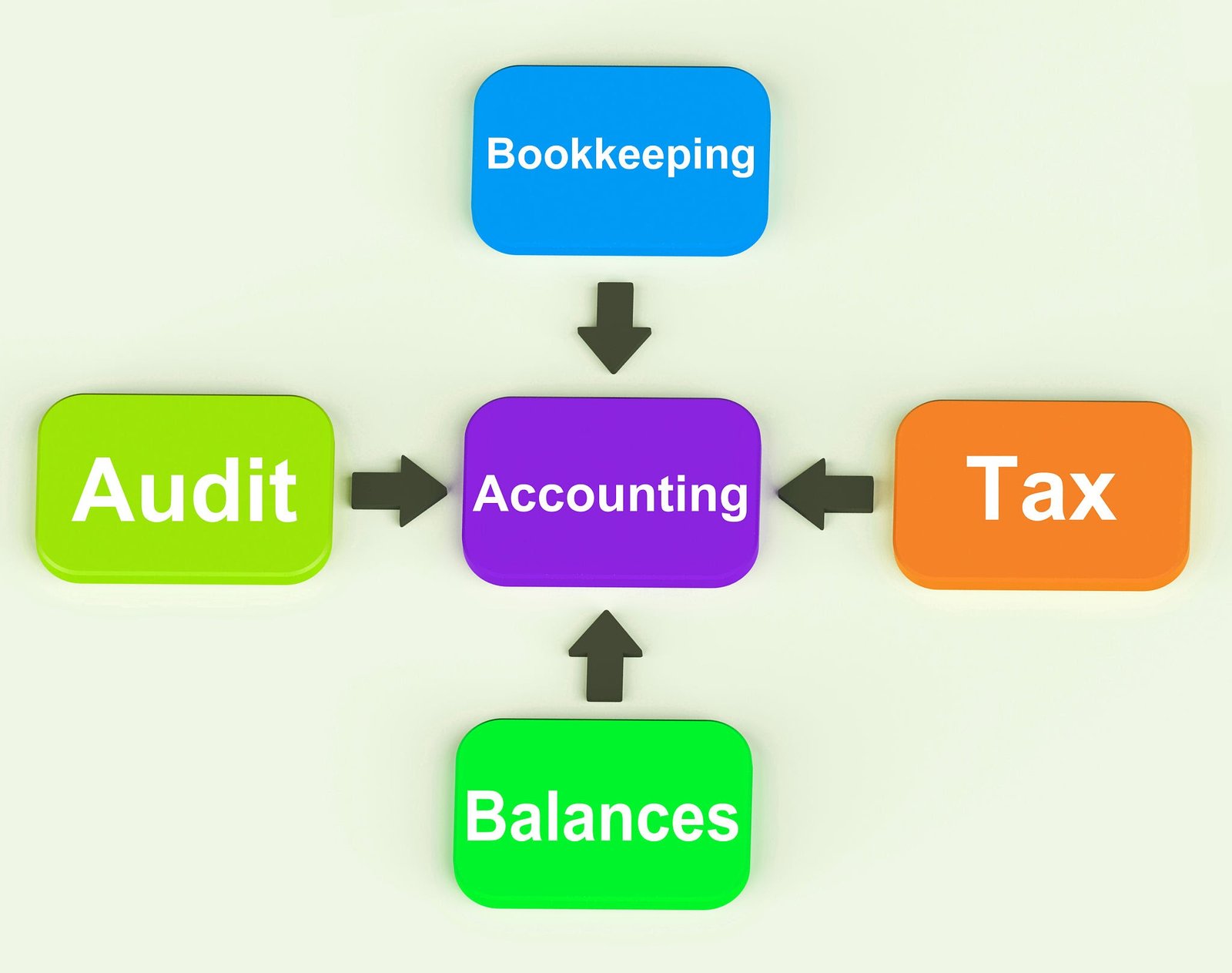
What Does a Bookkeeper Do? Key Daily Tasks
What Is Accounting?
Accounting, on the other hand, is a much broader and higher-level process. While bookkeeping focuses on recording transactions, accounting focuses on analyzing, interpreting, and summarizing all that recorded data to help a business make smarter financial decisions. Moreover, accounting involves preparing financial statements, filing taxes, and providing strategic advice to business owners.
If bookkeeping is the process of collecting all the puzzle pieces, then accounting is the process of putting those pieces together to see the full picture. Furthermore, accountants use the data provided by bookkeepers to produce reports that help business owners understand where their money is going, whether they are profitable, and what financial decisions they should make next.
Key Tasks of an Accountant
✅ Preparing financial statements — Income Statement, Balance Sheet, Cash Flow
✅ Analyzing financial data to identify trends and patterns
✅ Filing tax returns and ensuring tax compliance
✅ Budgeting, forecasting, and financial planning
✅ Conducting audits and reviewing financial accuracy
✅ Providing strategic financial advice to business owners
Accounting vs Bookkeeping — Core Differences
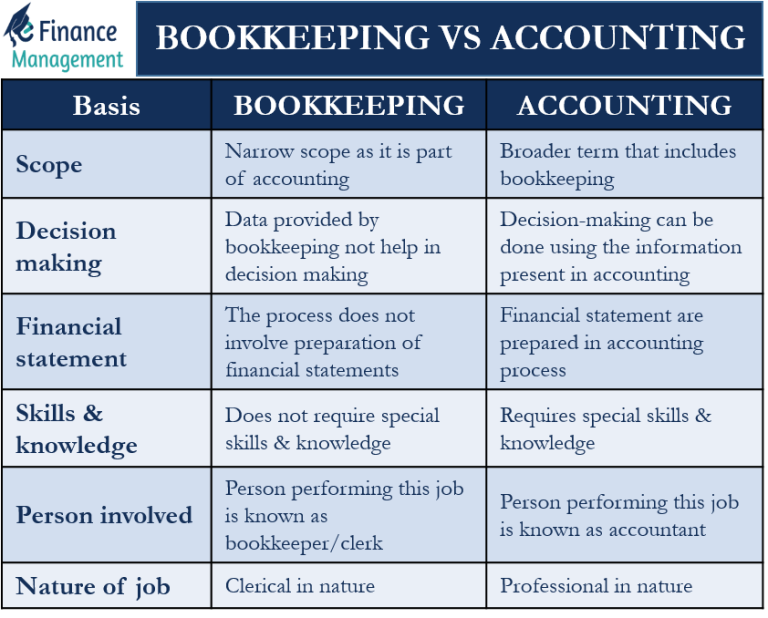
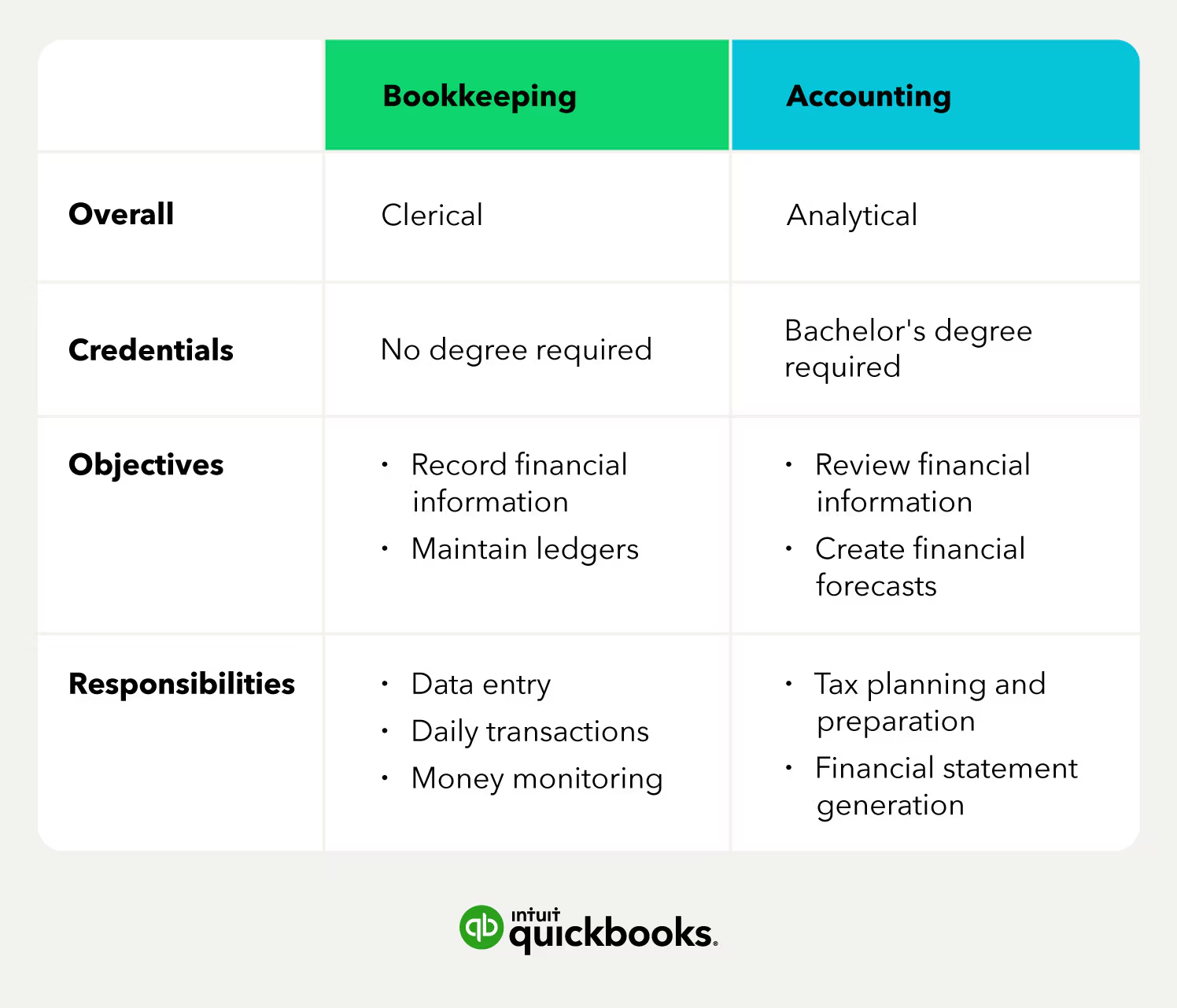
Now that we understand both terms separately, let’s compare them directly. The core difference between accounting and bookkeeping is that bookkeeping is about recording financial data, whereas accounting is about analyzing and interpreting that data to support business decisions. However, there are several other important distinctions worth knowing.
Side by Side Comparison Table
| Feature | Bookkeeping | Accounting |
|---|---|---|
| Main Focus | Recording transactions | Analyzing financial data |
| Nature | Administrative / Clerical | Analytical / Strategic |
| Output | Ledgers, journals, records | Financial statements, reports |
| Decision Making | Not involved | Central role |
| Education | Certificate / Associate degree | Bachelor’s degree / CPA |
| Tools Used | QuickBooks, Xero, Wave | SAP, Oracle, Excel models |
| Salary (US) | $45,000 – $60,000/year | $70,000 – $120,000+/year |
| Job Growth | -5% through 2033 (BLS) | +6% through 2033 (BLS) |
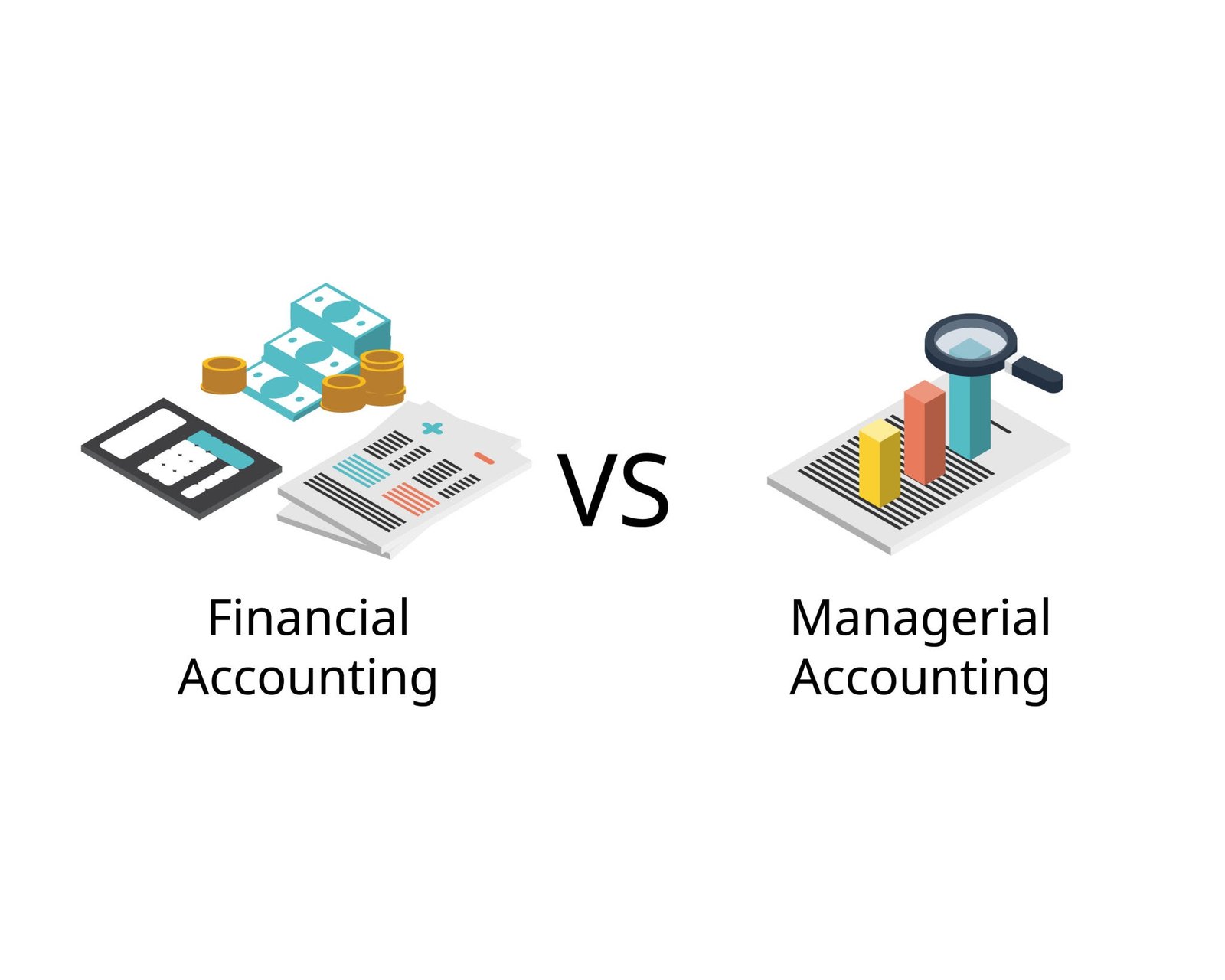
Accounting vs Bookkeeping — Side by Side Comparison
Which Comes First — Bookkeeping or Accounting?
Bookkeeping always comes first. This is one of the most importent things to understand about how financial management actually works in practice. Before an accountant can analyze anything, a bookkeeper must first record all the transactions. In other words, accounting cannot begin until bookkeeping has done its job properly.
Think of it this way — bookkeeping gives accounting the raw material it needs to function. Furthermore, the quality of your accounting is directly dependant on the accuracy of your bookkeeping. If the bookkeeping records are inaccurate or incomplete, consequently, all the financial analysis and reports that come out of the accounting process will also be unreliable.
Can a Bookkeeper Do Accounting?
This is one of the most frequently asked questions when people start learning about the difference between accounting and bookkeeping. The short answer is — it depends. A bookkeeper can handle some basic accounting tasks, such as preparing simple financial summaries or helping with tax preparation. However, they generally cannot replace a qualified accountant for complex tasks.
Moreover, in many countries, only a licensed accountant or CPA (Certified Public Accountant) is legally allowed to sign off on audited financial statements or provide offcial tax advice. Therefore, while there is some overlap between the two roles, bookkeepers and accountants are not interchangeable — especially as a business grows more complex.
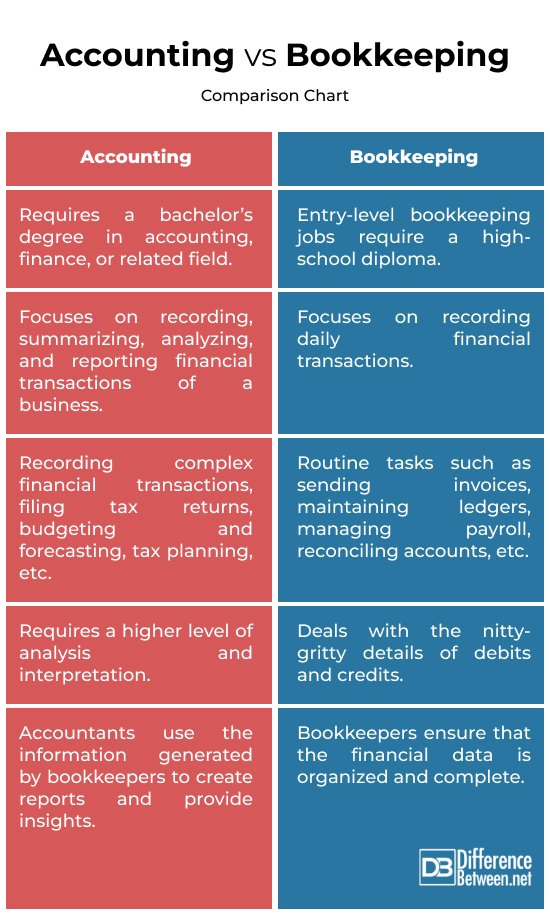
Bookkeeper vs Accountant — Who Does What?
Do Small Businesses Need Both?
Yes — and this is something many small business owners don’t realise until it’s too late. Both bookkeeping and accounting serve essential but different purposes in a business. As a result, most successful small businesses use both — either by hiring separate professionals or by using one person who is trained in both areas.
When to Hire a Bookkeeper
According to Xero, you should hire a bookkeeper when you are spending more than 5 hours per week on financial record keeping, or when invoicing and monthly reports are starting to overwhelm you. Furthermore, if you’re missing payments or losing track of expenses, a bookkeeper will bring order and accuracy to your daily finances.
When to Hire an Accountant
On the other hand, you should bring in an accountant when your annual revenue exceeds $500,000, when you need tax planning advice, or when you’re thinking about expanding your business. Moreover, if you ever face an audit or need to secure a business loan, having a qualified accountant on your side is absolutly essential.
Do Small Businesses Need Both a Bookkeeper and Accountant?
Common Mistakes Business Owners Make
Mistake 1 — Doing Everything Yourself: Many small business owners try to handle both bookkeeping and accounting on their own to save money. However, this often leads to errors, missed tax deadlines, and inaccurate financial statements. As a result, the cost of fixing these mistakes later is usually far greater than simply hiring a professional from the start.
Mistake 2 — Hiring a Bookkeeper and Expecting Accounting: This is another very commmon mistake. A bookkeeper is not trained to provide tax advice, financial forecasting, or audit services. Therefore, if you need these services, you must hire a qualified accountant — not just a bookkeeper.
Mistake 3 — Delaying Bookkeeping: Some business owners record transactions only once a month or once a quarter. Consequently, this leads to a messy backlog, missed deductions, and inaccurate financial records. In contrast, daily or weekly bookkeeping keeps everything organized and makes accounting much smoother at the end of the period.
Common Bookkeeping and Accounting Mistakes to Avoid
Quick Recap — Accounting vs Bookkeeping
Accounting = Analyzing
Bookkeeping comes first
Both are essential
Not interchangeable
Different education needed
Final Thoughts
The difference between accounting and bookkeeping is clear once you understand the role each one plays in a business. Bookkeeping is the daily discipline of recording every financial transaction accurately. Accounting, on the other hand, takes all that recorded data and transforms it into meaningful insights that drive business decisions. Furthermore, one cannot function effectively without the other.
Whether you are a student choosing a career path, a business owner deciding who to hire, or simply someone trying to understand how financial management works — knowing this difference will save you time, money, and a great deal of confussion. Therefore, invest in both — start with solid bookkeeping, and build on it with smart accounting.
Bookkeeping records the story. Accounting makes sure that story leads somewhere profitable.
good work keep it up i would love keep visiting here