
Accounting Basics · 2026 Edition
Profit and Loss Statement Explained
A complete, beginner friendly breakdown of what a P&L statement is, how its structured, and how to actually read one.
📋 Key Takeaways
- A profit and loss statement shows revenue, expenses, and profit or loss over a specific period of time
- Its also called the P&L, income statement, or statement of operations — same document, different names
- Unlike the balance sheet, the P&L covers a period — a month, quarter, or year — not a single moment
- Three key numbers matter most: Gross Profit, Operating Income, and Net Profit
- Profit on paper does not always mean cash in the bank — that’s a seperate story told by the cash flow statement
Every business decision you make eventually shows up in one document — your profit and loss statement. Whether you realise it or not, this single report tells the story of your business’s financial performance more clearly than almost any other document you’ll ever look at.
According to a 2026 breakdown by Beancount, a surprising number of small business owners either never look at their P&L statement or simply don’t know how to interpret what they’re seeing. That’s a problem, because if you’ve ever wondered whether your business is actualy making money — not just bringing in revenue, but genuinely profitable — the P&L is exactly where you’ll find the answer.
By the end of this guide, you’ll understand exactly what a profit and loss statement is, the key sections it’s built from, how to actually read one in a few minutes, and the most common mistakes small business owners make when analyzing theirs.
What Is a Profit and Loss Statement?
A profit and loss statement is a financial report that summarizes a business’s revenues, costs, and expenses over a specific period of time — typically a month, quarter, or year. It ends with one critical number: net profit or net loss.
According to AccountingTools, the P&L statement is considered by many to be the most crucial of all financial statements, because it directly reveals a business’s ability to generate a profit. As a result, its widely used to plan revenue improvements and identify where cost reductions are needed.
You’ll often see this exact same document called by different names — P&L statement, income statement, statement of operations, or profit statement. Regardless of the label, they’re all refering to the same thing: a report that answers one simple question — did the business make money or lose money during this period?
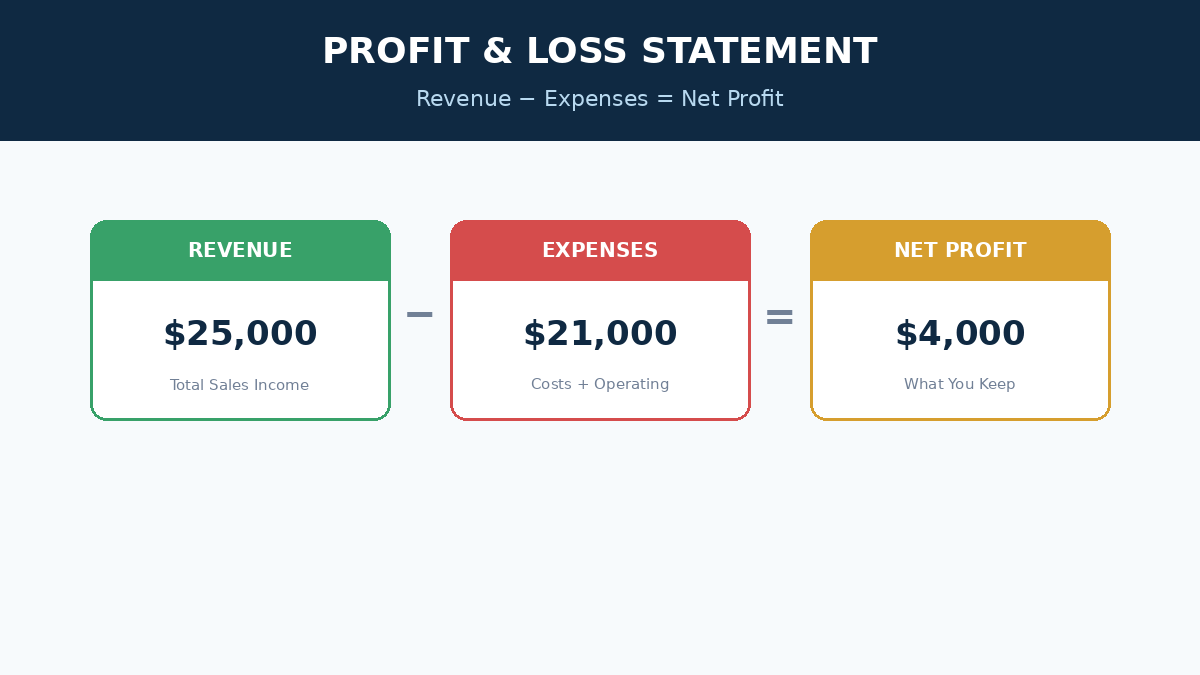
Fig 2. The basic P&L formula every business statement is built on
Why the Profit and Loss Statement Matters
At its most basic level, a P&L statement shows whether your business is profitable and whether your business model is actually sustainable. Furthermore, according to Gusto’s 2026 guide, potential investors will almost always want to review this document before putting any money into your business.
Here’s why it remains essencial in 2026, even with accounting software automating most of the heavy lifting:
- Reveals true profitability — revenue alone doesn’t tell you if you’re actually making money
- Guides pricing decisions — shows whether your margins can support a price cut or need a price increase
- Used for loans and investment — banks and investors rely on it to assess business health
- Tracks trends over time — comparing P&L statements month over month reveals growth or decline
- Required for tax filing — net income figures feed directly into tax calculations
A 2026 report by Foresight CPAs recommends that small business owners review their P&L statement at least monthly in 2026, since real-time analytics and AI tools now make it possible to monitor performance far more frequently than the old quarterly habit allowed.
The Key Components of a P&L Statement
A profit and loss statement is built from several core sections, stacked one on top of another. Understanding what each one means helps you interpret your results acurately instead of just staring at numbers.
Revenue
Total income earned from selling products or services, before any costs are subtracted. This is the starting line of every P&L.
Cost of Goods Sold
Direct costs tied to producing what you sell — raw materials, manufacturing, direct labor, and shipping.
Gross Profit
Revenue minus COGS. Shows how efficiently your business produces and delivers its product or service.
Operating Expenses
Indirect overhead costs — rent, salaries, marketing, utilities, software subscriptions, and admin costs.
Operating Income (EBIT)
Gross profit minus operating expenses. Shows profit from core operations, before interest and taxes.
Net Profit (Bottom Line)
What’s truly left after every expense, interest, and tax is subtracted. The final, real answer.
As explained by the Corporate Finance Institute, a multi-step P&L separates operating performance from non-operating items by showing subtotals like gross profit and operating income before arriving at net income — this structure is far more informative for lenders and investors than a single lump number would be.
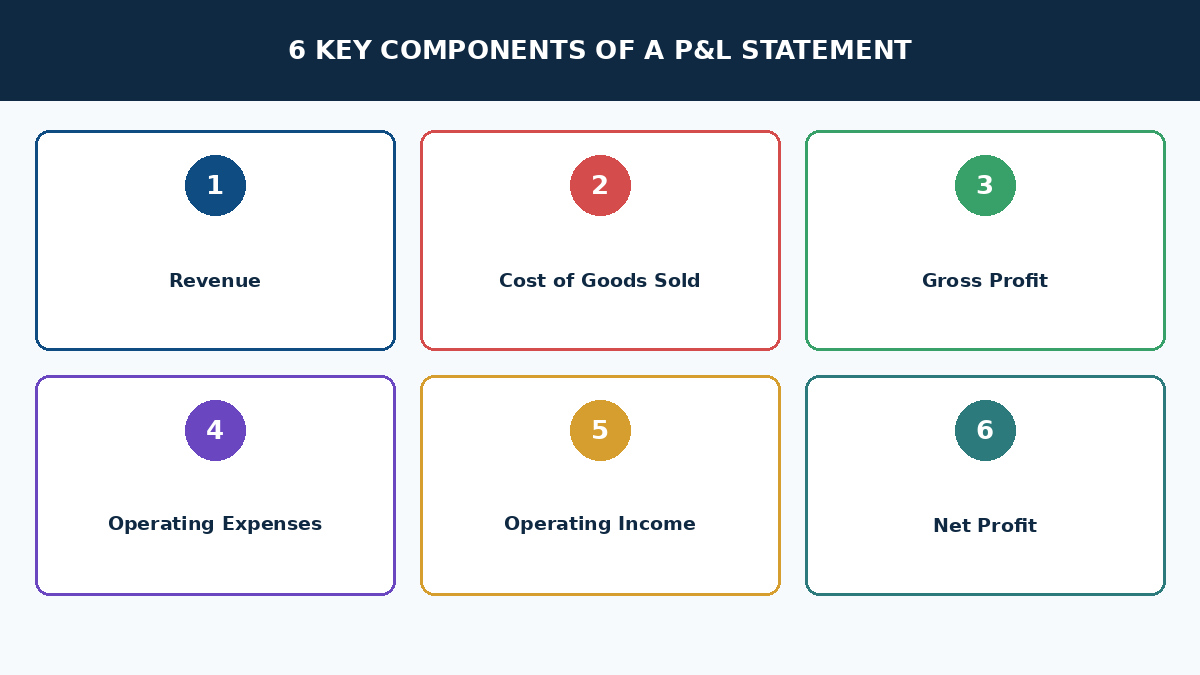
Fig 3. The six building blocks that make up every P&L statement
A Real Example — Profit and Loss Statement Walkthrough
Numbers click much faster with a real example. Here’s a simplified P&L for a small business called Coastal Coffee Co. for the month of March 2026:
| Line Item | Amount ($) |
|---|---|
| Revenue (Sales) | 25,000 |
| Cost of Goods Sold | (9,500) |
| Gross Profit | 15,500 |
| Rent & Utilities | (3,200) |
| Salaries & Wages | (5,800) |
| Marketing | (1,100) |
| Operating Income (EBIT) | 5,400 |
| Interest Expense | (400) |
| Taxes | (1,000) |
| Net Profit | 4,000 |
Following an example documented by QuickBooks, the “gross” sales figure isn’t necessarily what a business actually keeps — returns and discounts get subtracted to reach net sales, which is what should really be used as the starting point. In our example, Coastal Coffee Co. ends March with $4,000 in net profit, meaning the business genuinely made money that month, not just sold a lot of coffee.
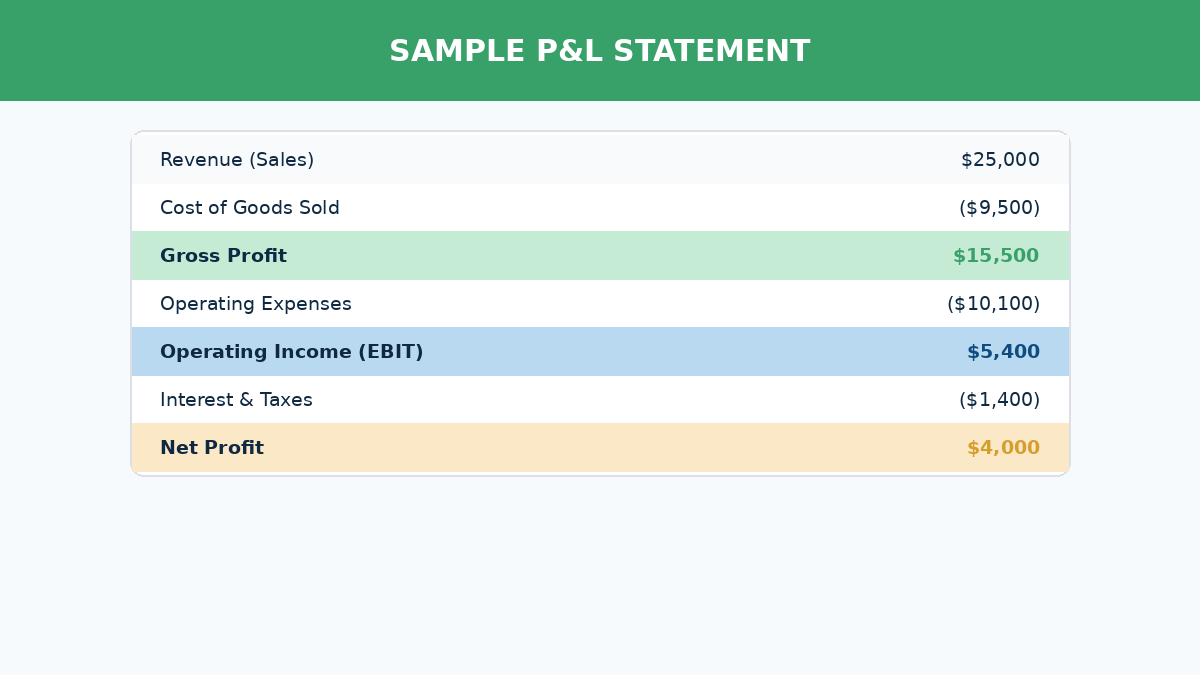
Fig 4. Reading a P&L statement gets faster the more often you practice with real numbers
How to Read a Profit and Loss Statement
You don’t need a finance degree to read a P&L statement properly. Here’s a simple framework most accountants and business owners follow whether their doing it for a coffee shop or a tech startup:
Start with revenue
Check if total revenue is growing compared to the previous period. A flat or declining top line is the first warning sign worth investigating.
Check gross profit margin
Divide gross profit by revenue. This percentage tells you how efficiently the core product or service is produced and sold.
Scan operating expenses
Look for any single expense category that’s growing faster than revenue — thats usually where cost control needs attention.
Look at net profit margin
Divide net profit by revenue. This final percentage tells you what portion of every dollar earned actually becomes real profit.
Compare across periods
A single P&L tells you little on its own — comparing several months or quarters reveals the real trend.
Common Mistakes When Analyzing a P&L Statement
According to Foresight CPAs, small businesses tend to repeat the same handful of mistakes when reviewing their profit and loss statement. Here are the ones worth watching for:
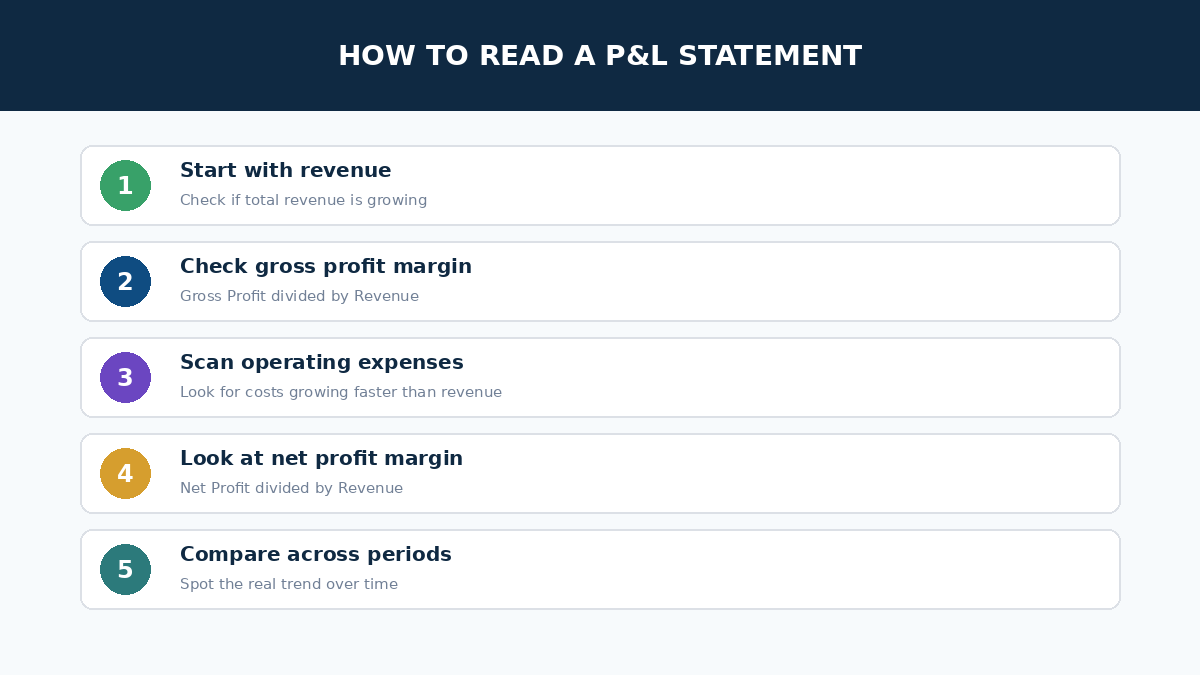
Fig 5. Catching these mistakes early prevents bigger financial surprises later
P&L Statement vs Balance Sheet — What’s the Difference?
These two get mixed up all the time, mainly because they show up together in every annual report. But they answer two completly different questions.
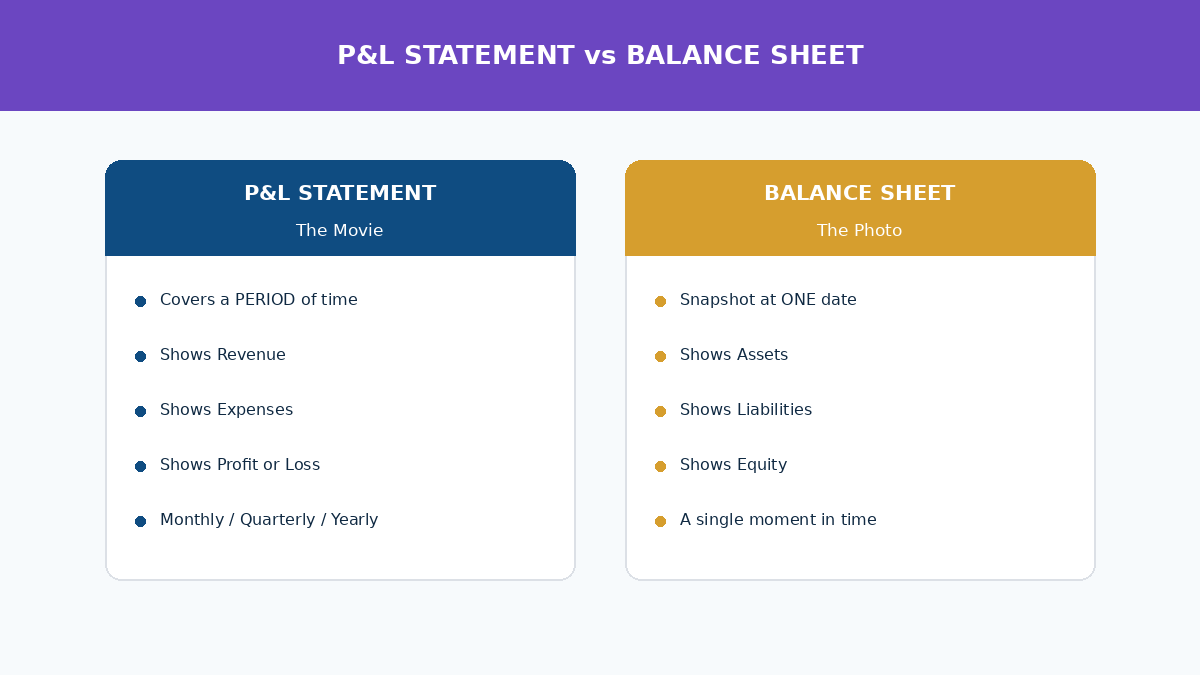
The P&L statement measures performance over a period of time — it’s the movie. The balance sheet, on the other hand, captures resources and claims against them at a single date — it’s the photo. You genuinely need both to understand the full financial picture of any business.
- P&L Statement — covers a period of time, shows revenue, expenses, and profit
- Balance Sheet — snapshot at one date, shows assets, liabilities, and equity
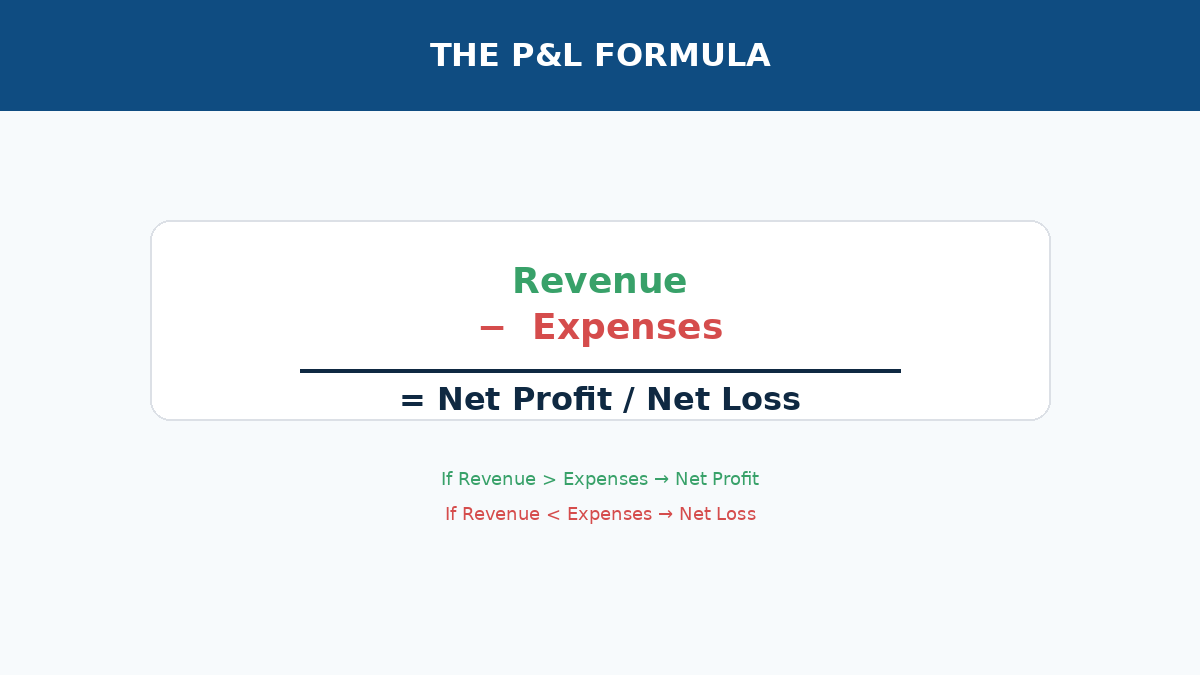
Fig 6. P&L and balance sheet work together but answer very different questions
This is for your information
Frequently Asked Questions About Profit and Loss Statements
Final Thoughts
The profit and loss statement isn’t just a document for accountants — it’s the clearest window any business owner has into whether their business model actually works. It tells you, in plain numbers, whether the work you’re putting in every day is translating into genuine profit.
Once you understand that it’s simply revenue minus expenses, broken into a few meaningfull stages — gross profit, operating income, net profit — the whole document stops feeling intimidating. Practice reading a few examples, calculate the margins yourself, and you’ll find that interpreting a P&L becomes second nature pretty fast.
If your just starting to take your business finances seriously, the P&L statement is one of the best places to begin — because every other financial decision you make eventually traces back to whether this number, at the bottom, is positive or negative.
Want to learn more?
Master the Full Accounting Picture
Understanding the P&L is one piece of the puzzle. Explore our other guides to see how it connects to the balance sheet and cash flow statement.