
Business Finance · 2026 Practical Guide
How Businesses Use Accounting Daily
Real-world accounting is not just year-end tax filing. Discover how smart businesses use accounting every single day to track cash, pay staff, make decisions, and grow.
📋 Key Takeaways
- Businesses use accounting every single day — not just at tax time or month end
- Recording sales and expenses daily is the single most important accounting habit any business can build
- Cash flow monitoring prevents the most common reason small businesses fail — running out of cash even when profitable
- Only 48% of small business owners say they’re confident they’re paying taxes correctly — daily accounting fixes this
- Businesses that moved to real-time accounting saw an immediate improvement in financial clarity and decision-making speed
Most people think accounting is something that happens once a year — a frantic scramble in March when taxes are due, or a tense meeting with an accountant who needs last year’s receipts. However, that picture couldn’t be further from the truth for businesses that actually run well.
In reality, accounting happens every single day in every functioning business — whether the owner realises it or not. From the moment a hotel checks in its first guest to the moment a shop closes its register at night, financial transactions are being created, recorded, tracked, and used to make decisions. The question isn’t whether your business uses accounting daily. The question is whether it’s doing it properly.
As Forbes Finance Council reported in April 2026, businesses that moved to real-time transaction tracking saw an immediate improvement — transactions were tracked in real time, expenses were categorised as they happened, and reports were generated without last-minute effort. What stood out wasn’t just the time saved, but also the reduction in uncertainty. They finally knew where they stood financially at any given moment.
This guide breaks down exactly how businesses use accounting on a daily basis — with real examples from hotels, restaurants, retailers, construction firms, and service businesses — so you can see what proper daily accounting actually looks like in practice.

1. Recording Daily Sales and Expenses
The most fundamental daily accounting task in any business is recording what money came in and what money went out. This sounds simple, but its the foundation everything else is built on. A business that doesn’t record its transactions daily is essentially flying blind.
What This Looks Like in Real Businesses
Consider a hotel in Dubai. Every morning, the night auditor has already run the daily report — reconciling every room charge, restaurant bill, spa service, and minibar purchase from the previous 24 hours. Each transaction has been categorized, the totals reconciled against the PMS (Property Management System), and any discrepancies flagged for investigation. Moreover, a retail store in Riyadh closes its register at the end of every shift — comparing the actual cash in the till against what the system says should be there. If there’s a difference, they find it before the manager goes home.
Additionally, as Datamatics CPA explains in their 2026 small business guide, bookkeeping covers the ongoing recording of every financial transaction a business makes — sales, expenses, payments, and receipts — and keeps accounts reconciled so the numbers reflect what is actually happening. Clean books mean you always know where your cash is going.
The Daily Routine Most Good Businesses Follow
Review opening bank balance — compare to yesterday’s closing balance. Flag any unexpected debits or holds.
Record incoming payments from customers. Process and post any supplier invoices received. Update receivables and payables ledgers.
Reconcile daily sales against the register/POS. Record any petty cash expenditures. File receipts and invoices for the day. Run end-of-day report.
A business doesn’t usually get into trouble because one transaction was miscoded. It gets into trouble because nobody stayed on top of the routine. Weeks pass, then months. Receivables age. Bills sit. Bank balances look healthy until payroll hits. That’s how owners end up saying — we’re busy, so why does cash feel tight? Therefore, the daily routine is not optional — it’s what keeps the whole system honest.
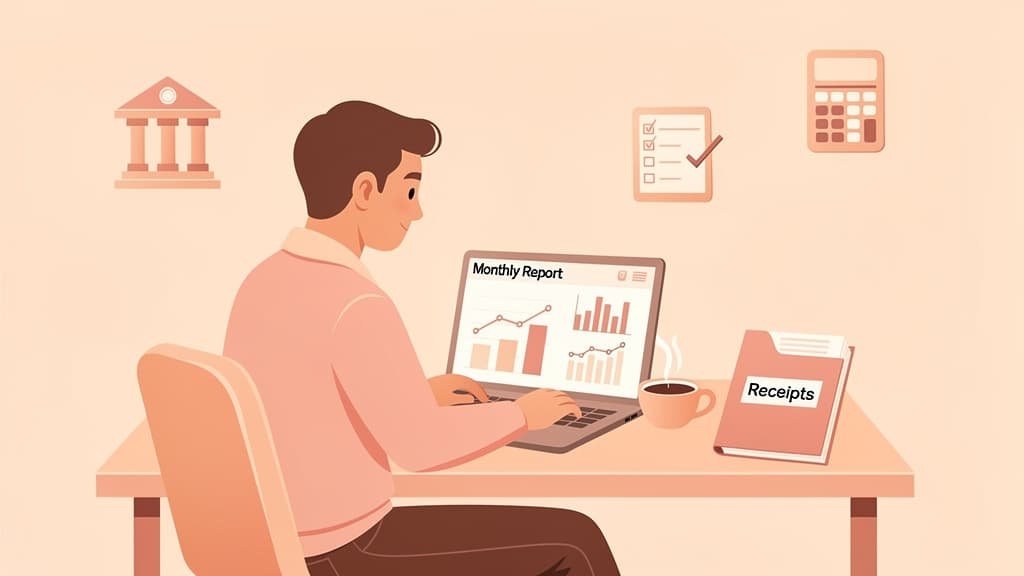
Fig 2. Hotel night auditors reconcile every daily transaction before the next business day begins
this is for your information
2. Monitoring Cash Flow Every Day
Cash flow monitoring is arguably the single most important daily accounting task for any business — because a company can be profitable on paper and still run out of money. This is not a theoretical risk — it’s the most common reason thriving businesses suddenly collapse.
The Profitable-But-Broke Problem
Imagine a construction firm in Saudi Arabia. They win a SAR 2 million contract and complete the work in December. Their income statement shows a handsome profit for December. However, the client’s payment terms are 90 days — meaning the actual cash arrives in March. Meanwhile, the firm still has to pay workers in January, buy materials in February, and cover overheads every month. That’s how a profitable business runs out of cash.
A service-based business that a Forbes advisor worked with believed its biggest issue was inconsistent client payments. But when they looked closer using a cloud-based dashboard, the issue wasn’t the clients — it was the process. Invoices were going out late, and follow-ups were irregular. After setting up automated invoicing and reminders, collections improved within a few months. Nothing about their revenue model changed. The accounting insight changed everything.
What Businesses Actually Track Daily
💵
Opening Cash Balance
What’s in the bank right now vs what bills are due this week
📥
Expected Inflows
Which customers are due to pay today, this week, overdue
📤
Upcoming Outflows
Supplier payments due, payroll dates, rent, utilities
⚠️
Cash Gap Alerts
Days where outflows exceed inflows — flagged in advance so action can be taken
Furthermore, Bookkeeping and Accounting Inc’s 2026 best practices guide recommends that businesses investigate and resolve any mismatched or unidentified transactions within 48 hours — the details are freshest in your mind right after a transaction occurs, making it easier to identify the source of the error.
3. Managing Payroll and Staff Costs
For most businesses, staff salaries and wages are the single largest daily expense — and they require constant accounting attention. Payroll isn’t something that just happens once a month. The financial implications of payroll are felt every single day.
Daily accounting tasks related to payroll include tracking attendance and overtime hours (which directly affects payroll calculations), recording daily wage costs for casual or shift workers, accruing monthly salary costs on a daily basis so the income statement reflects the true cost every day — not just on payday — and monitoring end of service liability buildup for Gulf-based businesses where gratuity accumulates daily.
Why Payroll Accounting Goes Wrong
Only 48% of small business owners say they’re confident they’re paying taxes correctly according to QuickBooks financial literacy statistics. Consequently, payroll tax errors are among the most expensive mistakes businesses make — and they’re almost always caused by poor daily tracking rather than one big mistake.
Additionally, in Gulf countries where end-of-service gratuity is a legal obligation for employers, failing to accrue this cost daily means the business balance sheet understates its true liabilities. Moreover, when an employee eventually leaves, the sudden expense hits the income statement as a shock rather than being smoothly absorbed over the employment period.

Fig 3. Payroll costs must be tracked and accrued daily for accurate financial reporting
4. Managing Accounts Payable and Receivable
Every business has two ledgers that require daily attention: what customers owe the business (accounts receivable) and what the business owes its suppliers (accounts payable). Letting either one go unmanaged for even a week creates real problems.
Accounts Receivable — Chasing Money Owed to You
Every day that an invoice goes unpaid costs the business money — in opportunity cost, in potential bad debt risk, and in the time eventually spent chasing it. Therefore, businesses that manage receivables properly typically do the following each day: review which invoices have passed their due dates, send automated reminders for overdue balances, call or email clients on amounts that are more than 30 days overdue, and record any payments received and match them to specific outstanding invoices.
| Invoice Age | Status | Daily Action Required |
|---|---|---|
| 0–30 days | Current | Monitor only — automated reminder 7 days before due |
| 31–60 days | Overdue | Email reminder sent — record on overdue list for daily review |
| 61–90 days | At Risk | Direct phone call — escalate to management — consider provision for bad debt |
| 90+ days | Bad Debt Risk | Consider legal action or write-off — record as bad debt expense |
Accounts Payable — Managing What You Owe
On the payable side, businesses review their supplier invoices daily — checking due dates, flagging early payment discounts, and ensuring nothing gets paid twice or missed entirely. The recommended approach is to establish internal controls where the person who handles daily bookkeeping is not the same person who performs the final reconciliation review — this simple separation adds a powerful layer of oversight to prevent errors and deter internal fraud.

Fig 4. Daily receivable management prevents cash shortfalls before they become crises
5. Using Accounting Data to Make Daily Business Decisions
The ultimate purpose of all that daily recording and monitoring is not compliance — it’s decision-making. Businesses that treat accounting as just a legal requirement are missing its most powerful use case: real-time intelligence about how the business is actually performing.
Real Decisions Driven by Daily Accounting Data
Consider these examples from businesses in the Gulf region and beyond that use daily accounting data for real operational decisions:
- A restaurant manager looks at daily food cost percentages — if the actual cost is running above budget, they investigate immediately (over-portioning? waste? theft?) rather than discovering the problem a month later
- A hotel revenue manager reviews daily RevPAR (Revenue Per Available Room) against the same day last year — and adjusts room rates in real time if occupancy is lagging
- A retail shop owner compares daily sales by product category — and quickly identifies if a promotion is working or failing before investing more budget into it
- A construction company’s accountant tracks daily actual vs. budgeted costs for each active project — and flags the project manager if a cost center is running over before it becomes a major overrun
The businesses that are running more smoothly aren’t necessarily earning more — they’re just seeing their numbers more clearly and sooner. And almost always, that change is tied to how they’re using technology in their accounting processes. Furthermore, cloud-based accounting software has made this kind of real-time visibility accessible to even very small businesses in 2026.
The Role of Technology in Daily Accounting
As Key CMS Accounting noted in their 2026 report, by 2026 small business owners understand their business performance in real time — gone are the days of waiting until end of month. Modern virtual accounting platforms allow owners to make quick and intelligent business decisions based on data that is accurate and up-to-date. Additionally, tools like QuickBooks, Xero, and Zoho Books automatically import bank transactions daily, categorize expenses, and generate reports without manual data entry — making daily accounting significantly faster than it was even five years ago.

Fig 5. Daily accounting data drives real operational decisions — from pricing to staffing levels
Frequently Asked Questions

Fig 6. Cloud accounting apps make daily financial monitoring accessible for businesses of any size
Final Thoughts
Accounting isn’t a once-a-year task any more than watering a plant is a once-a-year task. The businesses that thrive financially are the ones that treat their numbers as a daily conversation — not a stressful, once-a-year emergency. Recording transactions, monitoring cash, chasing receivables, managing payroll, and using the data to make smarter decisions — these are not big, dramatic activities. They’re small, consistent habits that compound into genuine financial control over time.
Moreover, with modern cloud accounting software making daily financial visibility easier than ever before, there’s genuinely no excuse for any business in 2026 to be operating without a clear, real-time picture of its financial position. Furthermore, if you’re building your accounting career, the businesses that hire and value their accountants most are the ones where accounting is a daily strategic tool — not a back-office afterthought.
To deepen your accounting foundations, explore our related guides on financial statements explained, how to learn accounting step by step, and accounting principles explained.
Looking for accounting work in Gulf?
Browse Verified Finance & Accounting Jobs
Find daily accounting, bookkeeping, and finance roles across Saudi Arabia, UAE, Qatar, and the wider GCC region.