
Bank Reconciliation Statement Explained: A Complete Guide for Beginners
Understanding how businesses match their books with bank records — and why it matters for accurate financial reporting.
Every business that maintains a bank account eventually runs into a simple but important problem: the balance shown in the company’s own cash book rarely matches the balance shown on the bank statement on any given day. This is where a Bank Reconciliation Statement (BRS) comes in. It is one of the most fundamental internal control tools in accounting, and understanding it is essential for anyone studying finance, running a small business, or working in bookkeeping.
What Is a Bank Reconciliation Statement?
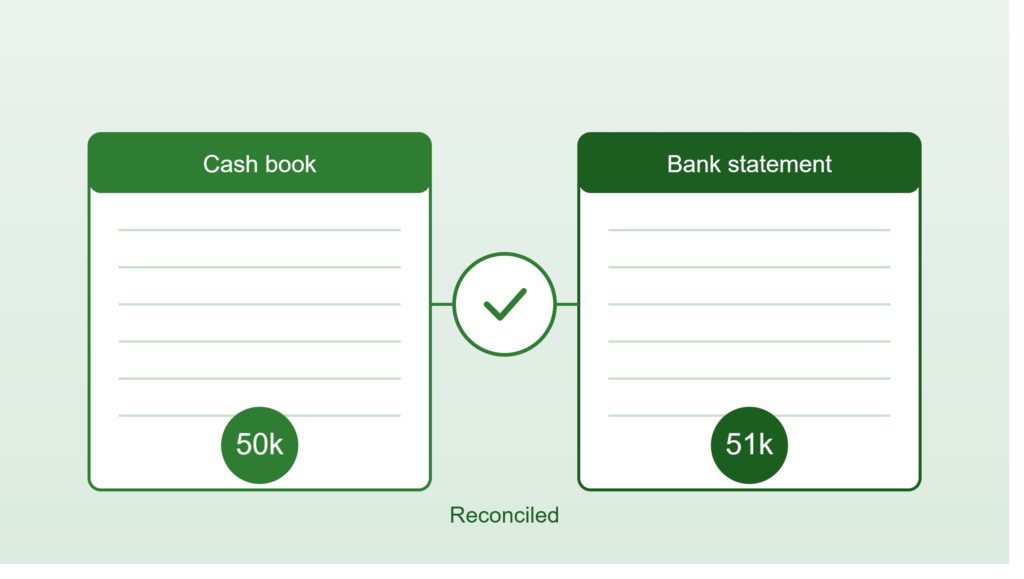
A Bank Reconciliation Statement is a document prepared to reconcile (match) the cash balance recorded in a company’s own accounting records with the balance reported by the bank on its statement. The two balances often differ — not because of an error, but because of timing differences and transactions that one party has recorded and the other has not yet processed.
The purpose of preparing this statement is not just clerical tidiness. It is a core internal control mechanism that helps businesses:
- Detect errors made by the business or the bank
- Identify fraudulent transactions or unauthorized withdrawals
- Track outstanding cheques and deposits in transit
- Ensure the cash balance reported in financial statements is accurate
Why Do Bank Balance and Cash Book Balance Differ?
There are several common reasons a business’s cash book balance won’t match the bank statement balance on the same date:
1. Cheques Issued But Not Yet Presented
When a business issues a cheque to a supplier, it immediately reduces the cash book balance. However, the bank does not deduct this amount until the recipient actually deposits and clears the cheque, which can take several days.
2. Deposits in Transit
Similarly, when a business deposits money or receives a cheque and records it in its books, the bank may not process and reflect that deposit until a day or two later.
3. Bank Charges and Fees
Banks often deduct service charges, account maintenance fees, or transaction fees directly from the account. These are recorded by the bank immediately but may not appear in the company’s books until the statement is reviewed.
4. Interest Earned or Credited
If the account earns interest, the bank credits this automatically. The business only becomes aware of it after checking the statement.
5. Direct Debits and Standing Instructions
Automatic payments such as utility bills or loan installments may be deducted directly by the bank without the business recording them right away.
6. Errors
Sometimes the difference is simply due to a recording mistake — either by the bookkeeper or by the bank itself, such as a transposed figure or a duplicate entry.
Format of a Bank Reconciliation Statement
There are two common approaches to preparing a BRS: starting from the cash book balance, or starting from the bank statement balance. Below is a simplified example of the most widely used format.
| Particulars | Amount |
|---|---|
| Balance as per Cash Book | 50,000 |
| Add: Deposits in Transit | 5,000 |
| Less: Unpresented Cheques | (3,500) |
| Less: Bank Charges | (200) |
| Add: Interest Credited | 150 |
| Balance as per Bank Statement | 51,450 |
Step-by-Step Process to Prepare a Bank Reconciliation Statement
- Compare both records: Start with the closing balance of the cash book and the closing balance shown on the bank statement for the same period.
- Identify unmatched items: Go through both records and mark transactions that appear in one but not the other.
- Adjust for timing differences: Add deposits in transit, subtract unpresented cheques.
- Adjust for bank-only entries: Add interest income, subtract bank charges, direct debits, or dishonored cheques.
- Correct any errors found: Fix mistakes in either the cash book or communicate discrepancies to the bank.
- Arrive at the adjusted balance: Both the adjusted cash book balance and the adjusted bank balance should now match.
Why Bank Reconciliation Matters for Businesses
Beyond just balancing numbers, regular bank reconciliation plays a critical role in financial health and fraud prevention. It helps businesses catch unauthorized transactions early, avoid overdraft penalties by knowing the true available balance, maintain accurate financial statements for tax and audit purposes, and build trust with investors, lenders, and auditors who rely on clean, verified financial records.
Many small businesses skip this step, assuming their bank balance is automatically correct. However, banks can and do make errors, and reconciliation is often the first line of defense in spotting them before they escalate into bigger accounting problems.
Common Mistakes to Avoid
- Not reconciling accounts on a regular monthly basis
- Ignoring small discrepancies, assuming they are not worth investigating
- Failing to follow up on outstanding cheques that remain unpresented for long periods
- Mixing personal and business transactions in the same account
Conclusion
A Bank Reconciliation Statement may seem like a small administrative task, but it is one of the most important checks a business can perform to safeguard its finances. By regularly comparing the cash book with the bank statement, businesses can catch errors early, prevent fraud, and ensure that the numbers reported in their financial statements truly reflect reality. Whether you’re a student learning accounting fundamentals or a business owner managing your own books, mastering bank reconciliation is a skill that pays off in accuracy and peace of mind.
Further reading: Investopedia – Bank Reconciliation | AccountingTools – Bank Reconciliation Process